 Italiano
NOTABLE PEOPLE OF POGGIO
|
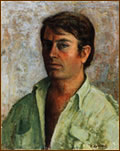
Poggio a Caiano was the birthplace of several celebrated figures (albeit for very different reasons), such as Filippo Mazzei (1730-1816), Sister Maria Margherita Caiani (1863-1921), the painter Francesco Inverni (1935-1991) and the baritone Giorgio Gatti (1948). It was also the adopted home of the painters Armando Spadini (1883-1925) and Ardengo Soffici (1879-1964). |
|
|
Sister Margherita Caiani was born in Poggio a Caiano on 2 November 1863 (in a house on via Cancellieri opposite the present-day town hall), where a plaque commemorates her. From a young age she dedicated herself to the education of the town's poorest children, and in 1900, together with a group of friends, she gave life to the first nucleus of the Congregation of the Daughters of the Sacred Heart in Poggio a Caiano. In 1902 she founded the present-day Institute, which stands on the state road facing the Villa and is the mother house of the Congregation, which now has numerous communities in Italy and abroad. Sister Margherita Caiani died at Montughi on 8 August 1921 and was beatified on 23 April 1989 by Pope John Paul II. Her remains rest in a shrine in the founding chapel of the Institute. |
|
The baritone Giorgio Gatti specialises in the comic repertoire of the 18th and 19th centuries. Thanks to his interpretations he has achieved international fame (as demonstrated by his participation in the television film-opera Tosca, shot in the actual places and at the actual times of Tosca in 1992 under the direction of Zubin Mehta and broadcast worldwide), contributing to the rediscovery and recording of rarely performed or entirely unpublished works by composers such as Anfossi, Cherubini, Cimarosa, Pergolesi, Salieri, and the two Scarlattis. With his wife Maria Teresa Conti, a pianist, he has formed a Duo for the performance of chamber music since 1972. Armando Spadini was born in Florence to a craftsman father and a seamstress mother, Maria Rigacci, a native of Poggio a Caiano. Around the first decades of the century, he was one of the masters of the so-called "new course" of Italian painting. He favoured intimate, everyday themes, as shown by the painting La sposa (The Bride), of 1908, depicting his wife in her wedding dress (today displayed at the Poggio branch of the Cassa di Risparmio di Prato bank), and the oil on canvas Bambini che studiano (Children Studying), of 1918, reproduced on the back of the 1000-lire banknote in circulation from 1990. Spadini is buried in the cemetery of Poggio a Caiano. His gravestone bears an epigraph by Soffici: "For art he lived - he died - he shall live on".
|
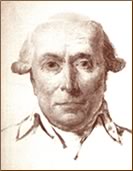 The most fascinating figure is undoubtedly that of Filippo Mazzei. Born in 1730, he was a physician and later a merchant and diplomat, moving from Turkey to London, and then to America, where he was a friend of Jefferson and Franklin. He contributed to the drafting of the American Constitution and travelled to Paris as a representative of Virginia. He took part in the French Revolution among the ranks of the moderates and became an agent of King Stanisław August Poniatowski of Poland. Having gone to Warsaw, he collaborated on the drafting of the Polish constitution of 1797, and finally retired to Pisa, where he died in 1816. His interesting Memoirs survive to this day.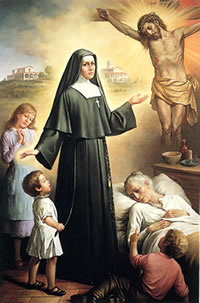
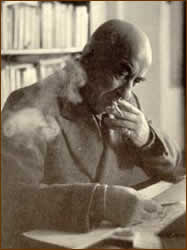 Born in Rignano sull'Arno, but a resident of Poggio by adoption, Ardengo Soffici, a versatile artist (painter, writer, critic), is one of the most interesting figures on the Italian and European cultural scene of the early 20th century. A contributor to "La Voce" and co-founder of "Lacerba", it is largely thanks to him that Impressionism, the sculpture of Medardo Rosso and the Cubism of Picasso and Braque became known in Italy from the early 1900s onward. Soffici linked his name to an important season of Italian art, Futurism, before arriving, with the so-called "return to order", at a lyrical, intimate dimension attested by the works produced during his stay in Poggio. A recurring subject of these works is precisely the Poggio itself, which Soffici loved to the point of saying: "Even today, after 55 years of painting, my work is a kind of identification between me and the town in which I live; through loving and understanding it so deeply, it has come about that I have become the town, and the town has become me". Soffici died at Forte dei Marmi on 19 August 1964 and rests in the cemetery of Poggio a Caiano. His house stands on the street that bears his name, at the start of the road to Carmignano, in the area known as "Le Fornaci". And Soffici ("i'sor Ardengo", as his fellow townspeople called him) left visible traces of his time in Poggio: in the aforementioned bell tower of the church of SS. Rosario and in the town's coat of arms. But above all in his paintings, whose long sequence forms a single, unbroken declaration of love for "his" town.